LANDE review
Agricultural lending backed by real assets. Look beyond the headline rate to the collateral, the seasons and the route to repayment.
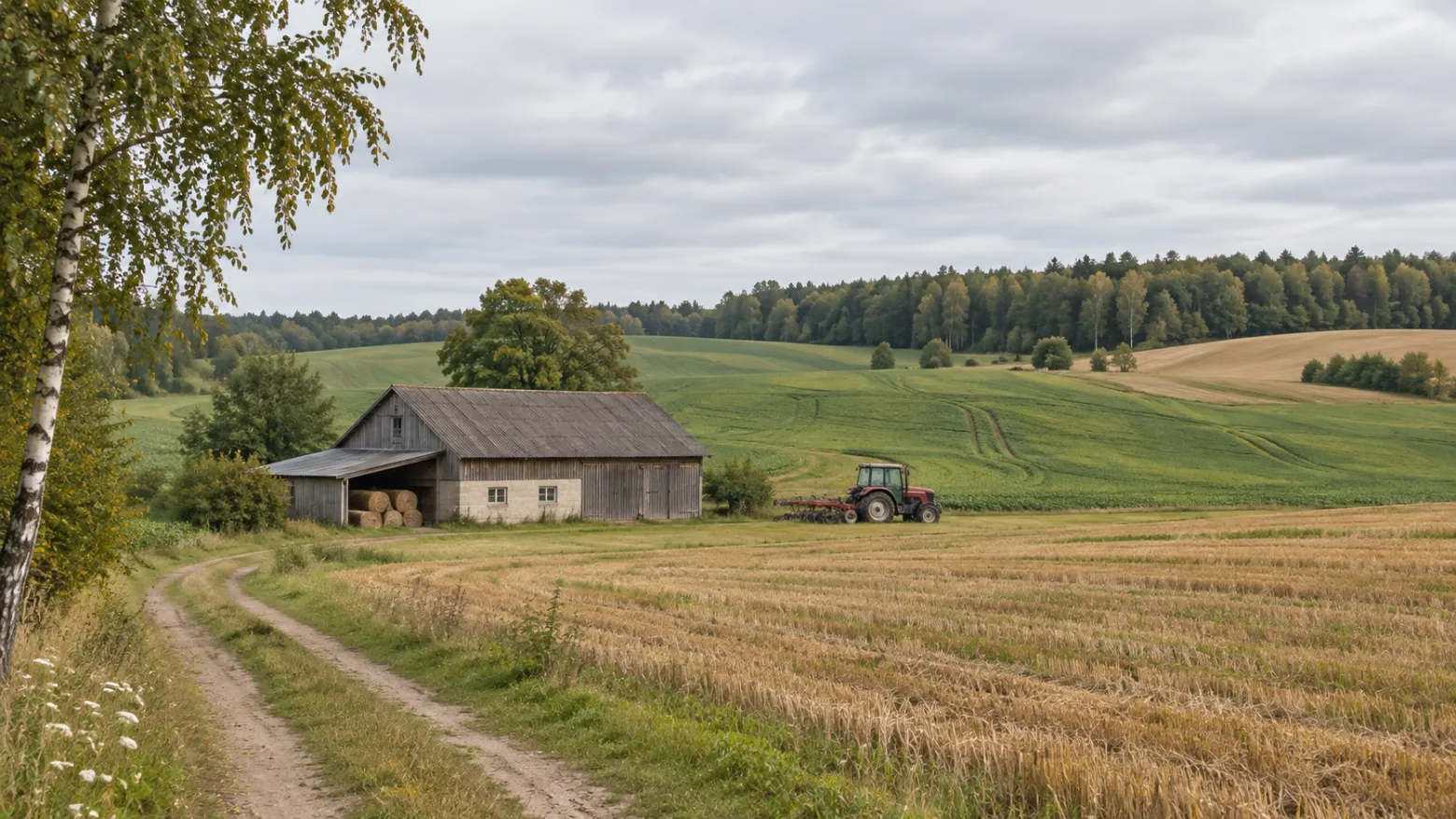
LANDE · Checked 9 November 2026
The 60-second version
LANDE is an agricultural crowdfunding platform financing farms with collateral such as land, machinery and harvest-related assets. Its website advertises an 11.2% annual return and a €50 starting investment. The rate is a platform headline, not a guaranteed result for each loan.
A farm-backed loan is not direct ownership of farmland. The investment remains dependent on the borrower’s ability to repay and, if it fails, the effectiveness of enforcement. Weather, input costs and commodity prices can affect several borrowers at once, so loan count alone is an incomplete diversification measure.
Capital is at risk. Repayment and returns are not guaranteed.
How independent reviewers rate it
Independent reviewers use different methods and dates. We show their published scores in their original scales, without averaging them.
External opinions, checked 9 November 2026. These are not our five-factor score, a consensus rating or a guarantee of safety.
How the investment works
LANDE announced its Latvian crowdfunding authorisation on 9 February 2024, following the regulator’s decision on 7 February. Its terms distinguish crowdfunding from insured deposits and investor-compensation coverage.
For each project, examine what is pledged, how it was valued, the repayment source and the payment schedule. Land, machinery and future harvest proceeds are not interchangeable security. An attractive loan-to-value ratio is a starting point: realised sale proceeds and enforcement costs determine what collateral can actually recover.
Advertised returns and actual cash flow
The Q3 2026 update reports €67 million in historical funding and an average LTV of 44.2%. These are dated platform-reported figures, not an audit of your expected return. Its discussion of defaults separates countries, collateral types and origination years.
Compare the coupon with actual payments on a consistent basis. A delayed loan can accrue interest while delivering no usable cash. Likewise, a low default figure for one country or asset type cannot be applied to the whole portfolio. Examine recoveries and remaining exposure alongside the default rate.
Assessment against our five checks
Our framework separates protection, performance, structure and access to money. These percentages are methodology weights, not scores assigned to the platform.
ECSP authorisation sets a regulatory framework, but it does not guarantee that pledged assets cover every loss.
Use the same loan vintage and definition when comparing repayment outcomes. Reported improvement in one segment does not establish a loss-free platform.
Distinguish advertised interest, accrued interest and cash returned after costs. Seasonal repayments can change monthly income substantially.
Assess borrower, country and collateral concentration. Similar farm businesses can respond to the same economic shock.
Auto-invest is available, but automation and resale are separate functions. Secondary-market eligibility is conditional and a buyer is still needed.
What works
- Access to a clearly defined agricultural lending segment.
- Project-level collateral information to assess alongside borrower cash flow.
- Public portfolio reporting and documented secondary-market rules.
- Manual selection and an auto-invest feature.
What to consider
- Collateral valuations are not guaranteed recovery proceeds.
- Harvest cycles and weather can delay repayments.
- Country and asset concentrations can connect apparently separate loans.
- A secondary market may be least useful precisely when a loan deteriorates.
How to get started
Create and verify your account
Register, complete verification and review the risk information.
Review the funding route
Compare individual projects, collateral and repayment schedules.
Choose your investment
Invest manually or configure auto-invest with deliberate exposure limits.
Monitor your portfolio
Monitor loan status, actual receipts and recovery updates.
May suit you if
- Investors seeking agricultural-credit exposure who can analyse the security.
- A long-term allocation able to tolerate uneven cash flows and recovery delays.
Less suitable if
- Cash needed for a fixed expense in the near future.
- Anyone assuming an ECSP licence or collateral guarantees repayment.
How the lending models differ
Different credit exposures, not interchangeable products. Check the terms and sources in each review before comparing headline returns.
| Platform | Exposure | Minimum | Return on offer | Access to money |
|---|---|---|---|---|
| LANDE | Agricultural loans | €50 | 11.2% advertised | Eligible loans only; buyer required |
| Triple Dragon Funding | Game-studio credit | €1,000 | Per offer | Originator discretion; no resale market |
| VIAINVEST | Consumer-loan securities | €50 | Up to 13% | Hold to maturity; no assured early sale |
Frequently asked questions
The platform publishes a Latvian ECSP authorisation dated 7 February 2024. This framework does not provide deposit insurance for the investment.
The official website states €50 per loan. Diversification requires considering total exposure, not only the minimum ticket.
Yes. Its help centre describes strategies using investor-selected criteria. Review the resulting portfolio rather than assuming automatic allocation removes concentration.
No: the published secondary-market rules exclude defaulted loans. A sale facility is not a guarantee that problem exposure can be exited.
Collateral creates a possible recovery route, not certainty. Valuation, legal priority, sale costs and the time required to enforce security all affect the outcome.
Both provide agricultural-credit exposure, but the projects, contractual structure and risk concentrations need separate assessment. Read both platform reviews and compare the same definitions of returns and defaults.
Our assessment
Collateral is a recovery route, not a repayment promise.
LANDE’s value proposition is access to secured agricultural credit, with risks tied to real businesses and recovery processes. It can be researched as a distinct portfolio exposure, provided the money can remain invested through delays.
Use external ratings as starting points for research. Read the current offer and contractual documents before making your own decision.
Explore the official platform ↗Related guides
Fees and access to your money
| Item | Current terms |
|---|---|
| Secondary-market sale | The help centre currently lists no sale fee. |
| Sale restrictions | Defaulted loans, certain repayment schedules and loans past their final scheduled payment cannot be sold. Check all eligibility rules. |
| Payment services | Check the applicable payment-provider terms and project documents before funding; a free sale does not establish that every service is free. |